In 2026, technology news shows that artificial intelligence is no longer just a buzzword. It is changing how we work and how startups compete. Innovation is moving faster than anyone expected, so keeping up is more important than ever.
Just five years ago, most people hardly knew what machine learning was. Now, AI systems make decisions that impact millions of people every day. This change is speeding up and even surprising experts in the field.
This article looks at the main technology trends shaping 2026. You will learn about real progress in AI, how businesses are adjusting, and where startups are going next. The focus is on clear, useful insights without confusing jargon.
Top Technology Trends to Watch in 2026
Technology is changing faster every year. Some major new developments are set to make a big impact in 2026.
These are not far-off ideas anymore. They are real projects already changing industries. Learning about them helps you prepare for what is coming next.
Artificial Intelligence: New Advances and Breakthroughs
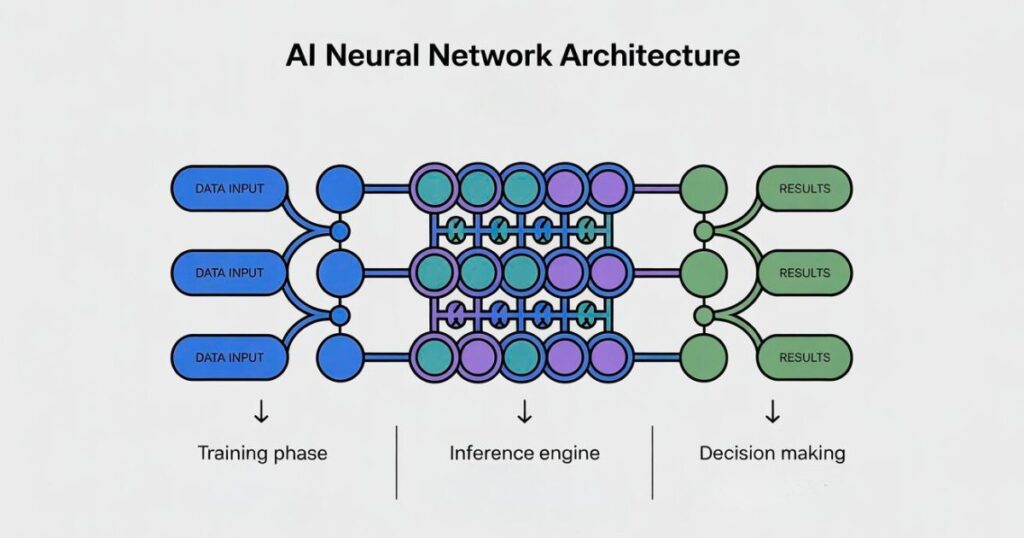
AI technology is growing rapidly. New systems this year can do tasks that seemed impossible only a few months ago.
Recent advances in neural networks help machines understand context better than before. They can process language in a way that feels truly conversational.
What sets today’s AI apart is its efficiency. Older models needed a lot of computing power for simple tasks, but new designs get better results while using less energy.
Agentic AI and Autonomous Systems
Agentic AI is a big step forward. These systems do more than just follow commands; they can work toward goals on their own.
Unlike traditional software, agentic systems can break down complex objectives into manageable steps. They adapt their strategies based on changing circumstances without constant human oversight.
Consider a logistics company managing thousands of deliveries daily. An agentic AI system doesn’t just optimize routes. It anticipates delays, reroutes drivers proactively, and even negotiates delivery windows with customers automatically.
Key capabilities include:
- Goal-oriented problem solving that adjusts tactics dynamically
- Multi-step planning across complex workflows
- Context retention across extended interactions
- Self-correction when initial approaches fail
This technology is important because it lets people avoid micromanaging. Teams can spend more time on strategy while AI takes care of the details.
How AI Supercomputing Platforms Are Driving Innovation
AI supercomputing platforms give the processing power needed for big breakthroughs. These are not ordinary data centers.
Specialized hardware architectures now accelerate specific AI workloads by orders of magnitude. Graphics processing units designed for parallel computation have become essential infrastructure.
The impact ripples across industries. Pharmaceutical companies simulate molecular interactions in hours instead of months. Climate scientists model weather patterns with unprecedented accuracy. Financial institutions detect fraud patterns invisible to human analysts.
Access to these platforms is becoming more open. Cloud companies now let startups and researchers use advanced AI by paying only for what they need.
Robotics and Physical AI Are Changing Industries
Physical AI brings smart technology into the real world using robots. This combination creates machines that can sense, learn, and act in changing environments.
Manufacturing floors now feature robots that adapt to product variations without reprogramming. Warehouses deploy autonomous systems that navigate around humans safely. Even agriculture benefits from smart robots that identify ripe crops and harvest with precision.
What changed? Vision systems improved dramatically. Robots “see” their surroundings with clarity approaching human perception. Combined with advanced decision-making algorithms, they handle unpredictable situations gracefully.
Adaptive Robotics in Manufacturing and Logistics
Adaptive robotics represents the next evolution in industrial automation. These machines learn from experience rather than following rigid programs.
For example, a factory robot might see that parts from one supplier need to be handled more gently. It changes its grip on its own, which cuts down on defects and saves time when production lines switch.
Logistics operations benefit enormously. Warehouse robots coordinate their movements like a swarm, optimizing pathways in real-time. When one robot encounters an obstacle, others reroute seamlessly.
The result for businesses is clear. Companies see productivity go up by 30-40% compared to older automation. There is less downtime because the systems can handle problems without needing people to step in.
AI Wearables and Smart Assistants in Everyday Life
AI wearables now do more than just track fitness. Devices on your wrist or in your ear can now predict what you need and help you before you even ask.
Modern smart assistants understand conversational context across days or weeks. You might mention needing a gift for your sister on Monday. On Thursday, the assistant surfaces relevant suggestions based on her interests from past conversations.
Health monitoring reached new sophistication levels. Wearables detect subtle physiological changes that indicate stress, fatigue, or potential illness. They recommend breaks, hydration, or medical consultations based on patterns over time.
Privacy concerns drove improvements, too. More processing happens on-device rather than in the cloud. Your data stays under your control.
Next-Generation Cybersecurity and Building Digital Trust
Cybersecurity threats evolved alongside defensive technologies. The stakes increased as more critical infrastructure connected to networks.
Old ways of reacting to threats are not enough anymore. Companies now need systems that can stop breaches before they happen.
AI-Powered Pre-emptive Cybersecurity
Pre-emptive cybersecurity uses AI to identify vulnerabilities before attackers exploit them. Instead of waiting for breach attempts, systems actively hunt for weaknesses.
Machine learning models look at network traffic to find unusual patterns that rule-based systems might miss. They can spot early signs of attacks, like the quiet steps hackers take before a real breach.
Here’s a real-world scenario: An AI security system notices unusual database queries from an employee account. The queries seem legitimate individually, but follow patterns associated with data exfiltration. The system flags the activity and restricts access automatically while alerting security teams.
The benefits go beyond just finding problems. AI systems can fix security holes on their own when updates are ready. They test these fixes in safe environments first to make sure nothing else breaks.
Blockchain and Security That Resists Quantum Threats
Quantum computing promises immense capabilities but threatens current encryption methods. Security experts race to develop quantum-resistant protection.
Blockchain technology evolved to address this challenge. New cryptographic algorithms withstand attacks from both classical and quantum computers. They secure transactions and data even as computing power increases exponentially.
Supply chain management benefits particularly. Blockchain creates immutable records that verify product authenticity from manufacturer to consumer. Counterfeiting becomes nearly impossible when every step gets cryptographically verified.
Financial institutions deploy quantum-resistant blockchain to protect transactions. The technology ensures today’s encrypted data remains secure decades from now.
New Trends in Hardware and Infrastructure
Hardware innovation drives software capabilities forward. The relationship works both ways—software demands push hardware evolution.
2026 brings fundamental shifts in how computing infrastructure operates.
Neuromorphic and High-Performance Computing Architectures
Neuromorphic computing mimics brain structure rather than traditional processor designs. The approach offers dramatic efficiency improvements for AI workloads.
Neuromorphic processors are different from regular chips, which process instructions one after another. These new chips work more like brain cells and can handle pattern recognition and learning while using much less power.
Research labs deploy neuromorphic systems for real-time sensor processing. A security camera analyzing thousands of video feeds uses less electricity than a light bulb while identifying threats instantly.
High-performance computing has also changed. Special chips now handle tasks like graphics, AI training, and database searches much more efficiently than regular processors.
Sustainable Data Centers and Energy-Efficient Technology
Data centers consume roughly 1-2% of global electricity. Sustainability became a critical concern as computational demands grow.
Green data centers implement multiple strategies to reduce environmental impact. Liquid cooling systems replace energy-intensive air conditioning. Facilities are located near renewable energy sources to power operations cleanly.
Energy-efficient technology extends beyond data centers. Processors now deliver more performance per watt than ever before. Software optimizations reduce unnecessary computation.
Some companies repurpose waste heat from servers to warm nearby buildings. Other times, computational workloads are designed to coincide with peak renewable energy availability.
The economic benefits align with environmental ones. Lower energy costs directly improve bottom lines while reducing carbon footprints.
Trending Technology News Highlights
To keep up with technology news, you have to sort useful information from the noise. There are thousands of announcements every day on many different platforms.
It helps to focus on the changes that really matter, especially those that affect how we live and work.
Smart Home and Consumer Technology Innovations
Smart home technology has gone from being a novelty to something many people need. Devices now work together smoothly instead of needing a different app for each one.
Voice assistants coordinate multiple systems. You might say “movie time,” and the lights dim, blinds close, the TV powers on, and the streaming service loads automatically. The magic happens through standardized protocols that let devices communicate regardless of manufacturer.
Energy management improved dramatically. Smart thermostats learn occupancy patterns and adjust temperatures for maximum comfort and efficiency. Solar panel systems coordinate with home batteries and grid pricing to minimize costs.
Privacy protections strengthened, too. More processing happens locally. Your voice commands don’t necessarily upload to corporate servers anymore.
Business Technology Changes and Enterprise AI
Businesses are now using AI in real operations, not just as experiments. Companies are making AI a key part of their main processes instead of treating it as something extra.
Customer service departments deploy AI assistants that handle routine inquiries with near-human quality. Complex questions escalate to human agents who have full context from AI conversations.
Sales teams use predictive analytics to identify prospects most likely to convert. Marketing departments generate personalized content at scale while maintaining brand consistency.
This change is not just about technology; it also means changing company culture. The best companies teach their employees to work with AI instead of worrying about being replaced.
Global Technology Reports and Predictions
Industry analysts release forecasts that shape investment and strategy decisions. Research firms like Gartner, IDC, and Forrester provide data-driven insights on market trends.
2026 predictions emphasize convergence. AI, connectivity, computing power, and interface design combine to create experiences impossible with any single technology.
Regional differences matter. Asia leads in mobile payment adoption and 5G deployment. Europe prioritizes privacy regulations that influence global standards. North America dominates cloud infrastructure development.
Understanding these patterns helps businesses position for growth in specific markets.
How These Technology Trends Affect Business, Startups, and Strategy
Technology trends bring both new chances and new risks. Companies that adjust do well, while those that ignore changes often struggle or fail.
The key lies in strategic implementation rather than chasing every shiny new tool.
Digital Transformation in How Businesses Operate
Digital transformation goes deeper than adding technology to existing processes. It fundamentally reimagines how organizations create and deliver value.
Legacy companies face particular challenges. Their existing systems and processes evolved over decades. Transformation requires careful orchestration to avoid disrupting ongoing operations.
Successful changes begin with clear goals. What customer problems need to be solved? Where are the biggest slowdowns in operations? The right technology choices come from answering these questions.
For example, a mid-sized retailer might find that customers leave their carts because shipping costs are a surprise at checkout. The answer might not be AI, but simply showing shipping estimates earlier in the process.
Integrating AI Into Core Enterprise Systems
Adding AI to business systems takes careful planning. Simply attaching AI to old systems often does not work well.
The most successful implementations identify specific high-value use cases. Perhaps accounts payable processes thousands of invoices monthly. AI can extract data automatically, match invoices to purchase orders, and flag discrepancies.
Data quality determines AI effectiveness. Systems trained on incomplete or biased historical data perpetuate those flaws. Companies invest heavily in data cleaning and validation before deploying AI.
Change management matters as much as technology. Employees need training and reassurance. They must understand how AI augments rather than replaces their expertise.
Using Automation to Boost Business Efficiency and Growth
Automation eliminates repetitive tasks that consume employee time without adding value. The freed capacity enables focus on strategic work.
Consider financial services. Loan applications once required a manual review of dozens of documents. Automated systems now verify information, check credit, assess risk, and generate approval decisions in minutes.
Customer support automation handles common questions instantly. Live agents concentrate on complex issues requiring judgment and empathy.
Manufacturing automation extends beyond physical production. Scheduling, inventory management, quality control, and maintenance prediction all benefit from intelligent systems.
The benefits of growth add up over time. Being more efficient means companies can serve more customers without raising costs as much.
Startup Ecosystem Trends to Watch in 2026
The startup ecosystem experiences significant shifts driven by technological capabilities and market dynamics.
Funding patterns, business models, and success factors evolved considerably from previous years.
AI-Driven Startup Models and How They Disrupt Markets
AI-focused startups create products that would not be possible without machine learning. They do not just add AI as a feature; their whole business depends on smart systems.
A healthcare startup might analyze medical imaging to detect diseases earlier than human radiologists. The competitive advantage comes entirely from algorithm quality and training data.
AI speeds up market changes. Old barriers like distribution or manufacturing are less important when software is what creates value.
Fintech startups challenge established banks with superior user experiences and instant approvals. Education technology companies personalize learning at scales impossible for human teachers.
But not every AI startup makes it. The technology can become common quickly. To stay ahead, companies need things like special data, strong networks, or deep knowledge in their field.
Challenges in Funding, Growth, and Innovation
Startup funding conditions fluctuate with economic cycles. 2026 sees increased scrutiny on paths to profitability.
Investors now care more about solid business models than just fast growth. The old idea of growing at any cost has been replaced by a focus on making the numbers work.
Early-stage funding remains available for genuinely innovative ideas. Later-stage rounds require demonstrating traction and clear routes to profitability.
Growth is not just about money. Finding skilled workers is harder as more companies compete for talent. Remote work means more people can apply, but it also means more competition.
Regulatory compliance grows more complex. Privacy laws, AI ethics guidelines, and industry-specific regulations require careful navigation.
Skills, Jobs, and the Workforce of the Future
Work today looks very different from ten years ago. Automation is changing the skills that employers want.
Workers need strategies to remain relevant as technology advances.
Upskilling for Roles in AI and Automation
Learning new skills is now a must, not just a nice-to-have. Technical skills become outdated much faster than before.
Learning platforms offer courses in machine learning, data analysis, and automation tools. Many certifications can be completed in weeks or months rather than requiring years.
Critical skills include:
- Data literacy to understand and work with information
- AI collaboration to effectively use intelligent tools
- Problem-solving that combines human creativity with machine capabilities.
- Adaptability to learn new technologies continuously
Soft skills matter more than ever. As machines handle routine tasks, uniquely human capabilities like empathy, persuasion, and strategic thinking become differentiators.
Companies increasingly provide internal training programs. They recognize that developing existing employees often beats hiring externally.
Adopting Technology for Remote and Hybrid Work
Remote work has gone from a temporary fix to a permanent setup for many companies. Technology now makes it easy to work together from different places.
Video calls have gotten much better. People feel less tired from meetings because the tools are easier to use and more reliable. Teams can also use tools that let them work together without needing to be online at the same time.
Hybrid work mixes time at home and in the office. Technology helps people switch easily between the two. Cloud systems make sure everyone can get to their files and apps from anywhere.
Security concerns drove innovation in remote access. Zero-trust architectures verify every connection rather than assuming internal networks are safe.
Tools for tracking productivity now focus on helping employees instead of just watching them. The best systems find out what is getting in the way of good work, not just how busy people are.
Where to Find the Latest Technology News
To stay informed, you need to pick trustworthy sources. There is so much tech news that it is important to filter out what matters.
Different sources are good for different things, like breaking news, in-depth analysis, or updates for certain industries.
Technology News Aggregators
Aggregators collect content from multiple sources, highlighting important stories.
- Techmeme: Real-time technology news aggregator that surfaces trending stories across the industry. It updates continuously throughout the day with minimal editorial filtering.
- Digg: Trending online content, including technology sections curated partly by community voting. Offers broader coverage beyond pure technology into related topics.
Aggregators make it easy to see what is getting attention, but they focus more on what is trending than on covering everything in detail.
Trusted Technology News Websites
Established publications offer in-depth reporting and analysis.
- Futurism: Science and technology news focusing on emerging innovations and their potential impact. Coverage emphasizes forward-looking developments.
- Ars Technica: In-depth technology coverage across fields including computing, science, policy, and business. Known for technical accuracy and detailed explanations.
These sources give background and expert opinions, not just news updates. They help readers see what the news means, not just what happened.
Specialist and Startup-Focused Sources
Industry-specific publications offer deeper insights for particular sectors.
- TechCrunch: Startup and venture capital news with strong coverage of funding rounds and company launches
- VentureBeat: Enterprise technology and AI developments with a business focus
- The Information: Premium subscription service with investigative technology journalism
- Protocol: Policy and regulation coverage alongside technology news
Pick your news sources based on what you care about. Using a mix of sources helps you avoid hearing the same thing everywhere and keeps you from getting overwhelmed.
What to Watch in Technology Beyond 2026
Looking past immediate trends reveals longer-term patterns shaping the next decade.
Some developments remain experimental today but will define tomorrow’s landscape.
Long-Term Forecasts and Innovation Cycles
Innovation usually follows a pattern. New technologies appear, people get excited, reality falls short, and then useful applications finally develop.
Right now, quantum computing is in a phase where the excitement has faded because it has not met early expectations. Still, steady progress is being made toward real-world uses.
Biotechnology and AI convergence promise revolutionary healthcare advances. Personalized medicine based on genetic profiles will become standard rather than exceptional.
More money is going into climate technology. Efforts like carbon capture, new ways to store energy, and making sustainable materials are speeding up as the need becomes more urgent.
Space technology transitions from government monopoly to commercial marketplace. Satellite constellations, lunar resources, and eventually Mars exploration drive innovation.
Policy, Regulation, and Ethical Growth in Technology
Regulation is having a hard time keeping up with new technology. Lawmakers often do not have the technical know-how, and tech experts sometimes overlook the bigger social issues.
AI ethics moved from philosophical discussion to practical necessity. Questions about bias, transparency, and accountability require concrete answers. Companies deploy ethics boards and impact assessments.
Privacy regulations proliferate globally. Europe’s GDPR influenced laws worldwide. Users gain more control over personal data while companies face stricter requirements.
Antitrust concerns focus on big tech platforms. Debates continue about market power, data advantages, and competitive practices. Outcomes will shape industry structure for decades.
International coordination becomes critical as technology operates globally, but regulations remain national. Harmonizing standards while respecting local values presents ongoing challenges.
Conclusion: What This Means for the Future
Technology trends in 2026 reveal acceleration rather than stabilization. The pace of change continues to increase across artificial intelligence, robotics, cybersecurity, and infrastructure.
These changes bring new chances for people and companies who are ready to adapt. Businesses that use new technology wisely get ahead. Startups with fresh ideas can shake up old markets. People who keep learning new skills stay in demand.
But technology by itself is not enough for success. Good strategy, ethics, and human judgment are more important than ever. The best results come from mixing machine efficiency with human creativity.
Staying informed provides the foundation for good decisions. The sources and trends outlined here offer starting points for understanding this rapidly evolving landscape.
What matters most is taking action. Whether you are trying out AI tools, learning new skills, or just staying curious, being involved is better than just watching from the sidelines.
The future is shaped by the choices we make now. Knowing about the latest technology trends helps you make better decisions.
Frequently Asked Questions
What are the tech trends for 2026?
In 2026, technology is all about smarter systems and faster innovation. AI is moving from tools to autonomous collaborators, helping businesses and startups work more efficiently. Robotics is getting adaptive — robots can now learn new tasks without reprogramming. Smart devices and wearables are becoming proactive assistants in daily life, while cybersecurity is shifting from reactive to pre-emptive protection. Sustainability matters too: energy-efficient hardware and green data centers are on the rise. Overall, it’s a year of AI, automation, smart infrastructure, and connected technology.
What will be invented in 2026?
Agentic AI that can make decisions and plan independently.
Adaptive robotics for manufacturing, logistics, and healthcare.
Next-gen AI wearables that anticipate your needs.
Quantum-resistant cybersecurity solutions to protect data.
Neuromorphic computing mimicking the brain for ultra-efficient AI.
Why is 2026 a special year?
2026 is special because it marks a turning point in how technology integrates with our lives. AI and automation are no longer supporting roles—they’re partners in business, healthcare, and everyday life. Startups are leveraging these tools to innovate faster than ever. At the same time, sustainability, ethical AI, and digital trust are becoming central to tech development. In short, 2026 is the year technology becomes truly intelligent, adaptive, and responsible.
What are the 7 advanced technologies?
Artificial Intelligence (AI) & Machine Learning – smarter, autonomous systems.
Robotics & Adaptive Automation – machines that learn and adapt.
Quantum Computing & Quantum-Resistant Security – ultra-powerful computing and data protection.
Neuromorphic Computing – brain-inspired processors for efficiency.
AI Wearables & Smart Assistants – proactive personal and professional helpers.
Blockchain & Distributed Ledger Tech – secure, transparent digital systems.
Sustainable Tech & Green Infrastructure – energy-efficient computing and environmentally conscious innovations.